


The world of finance is undergoing a silent, yet profound, revolution. From digital art fetching millions to entirely new financial systems emerging, one term consistently surfaces: cryptocurrency. But what exactly is this digital phenomenon, and more importantly, how does crypto work? It can seem intimidating at first, shrouded in technical jargon and complex concepts. However, understanding the core principles behind cryptocurrencies is key to grasping their potential to reshape industries, empower individuals, and redefine traditional notions of money. This comprehensive guide will demystify the mechanics of crypto, breaking down the intricate layers into understandable components.
The Foundation: Blockchain Technology
At the heart of virtually every cryptocurrency lies an ingenious invention called blockchain technology. Imagine a digital ledger, a continuously growing list of records, that is not stored in one central place but is instead distributed across a vast network of computers worldwide. This is the fundamental concept of a blockchain.
What is a Blockchain?
A blockchain is essentially a distributed, immutable ledger that records transactions in a secure and transparent manner. Each “block” in the chain contains a bundle of validated transactions, a timestamp, and a cryptographic hash of the previous block. This chaining of blocks creates an unbroken, chronological record.
- Distributed Ledger: Instead of a single bank server, copies of the ledger are maintained by every participant (node) in the network.
- Immutability: Once a transaction is recorded in a block and added to the chain, it is extremely difficult, if not impossible, to alter or delete it. This is due to cryptographic linking.
- Transparency: All participants can view the transaction history (though identities are typically pseudonymous).
- Security: Cryptographic hashes ensure the integrity of each block and the entire chain.
Practical Example: When you send Bitcoin, that transaction is bundled with others into a new block. This block is then verified by network participants, cryptographically sealed, and added to the existing Bitcoin blockchain. Once added, it becomes a permanent, verifiable record.
Actionable Takeaway: Understanding blockchain’s distributed and immutable nature is crucial, as it underpins the trust and security of cryptocurrencies without needing a central authority.
Decentralization: No Central Authority
One of the most revolutionary aspects of blockchain and cryptocurrencies is decentralization. Unlike traditional financial systems where banks and governments act as central intermediaries, cryptocurrency networks operate without a single point of control.
- Peer-to-Peer Network: Transactions occur directly between users (peer-to-peer), validated by the network’s participants.
- Censorship Resistance: No single entity can unilaterally block or reverse transactions, making the system more resistant to censorship or government interference.
- Reduced Single Point of Failure: Since the ledger is distributed, even if some nodes go offline, the network continues to operate.
Practical Example: If you use a traditional bank, they control your funds, approve transactions, and can even freeze your account. With Bitcoin, you control your private keys, and your transactions are validated by a global network of independent nodes, not a single bank.
Actionable Takeaway: Embrace the concept of self-custody and understand that with decentralization comes greater personal responsibility for managing your digital assets.
Cryptography: The Bedrock of Security
The “crypto” in cryptocurrency refers to cryptography, the science of secure communication. This advanced mathematics is what makes blockchain networks secure, verifies transactions, and protects user identities.
- Public and Private Keys: Each crypto user has a public key (like an account number) and a private key (like a password). The public key is used to receive funds, while the private key is used to authorize spending.
- Digital Signatures: Transactions are digitally signed with a private key, proving ownership and ensuring the transaction hasn’t been tampered with.
- Hashing: Cryptographic hash functions convert input data into a fixed-size string of characters. This is used to link blocks securely and ensure data integrity.
Practical Example: When you want to send Ethereum, you use your private key to “sign” the transaction. This signature proves you own the Ethereum and authorizes its transfer. The transaction is then broadcast to the network for validation.
Actionable Takeaway: Never share your private keys. They are the sole proof of ownership of your crypto, and losing them means losing access to your funds forever.
Cryptocurrencies: Digital Assets Explained
With blockchain as the backbone, cryptocurrencies emerge as the digital assets that operate on these networks. They are much more than just digital money; they represent a diverse class of assets with varying functionalities and purposes.
What are Cryptocurrencies?
Cryptocurrencies are digital or virtual currencies secured by cryptography, making them nearly impossible to counterfeit or double-spend. Many are decentralized networks based on blockchain technology, not issued by any central authority, making them theoretically immune to government interference or manipulation.
- Digital Scarcity: Many cryptocurrencies, like Bitcoin, have a fixed supply, mimicking the scarcity of precious metals.
- Medium of Exchange: Can be used to buy goods and services (though adoption varies).
- Store of Value: Held as an investment, similar to gold, with the expectation of increasing value over time.
- Programmable Money: Some, like Ethereum, can execute “smart contracts,” enabling complex agreements without intermediaries.
Practical Example: Think of Bitcoin as digital gold – a scarce, decentralized store of value. Ethereum, on the other hand, is like programmable oil – it powers a vast ecosystem of decentralized applications (dApps) and smart contracts.
Actionable Takeaway: Recognize that while all cryptocurrencies use blockchain, their underlying purpose and technological capabilities can differ significantly, impacting their potential use cases and value.
Types of Cryptocurrencies
The crypto market is vast and constantly expanding, featuring thousands of different cryptocurrencies, each with unique features and goals.
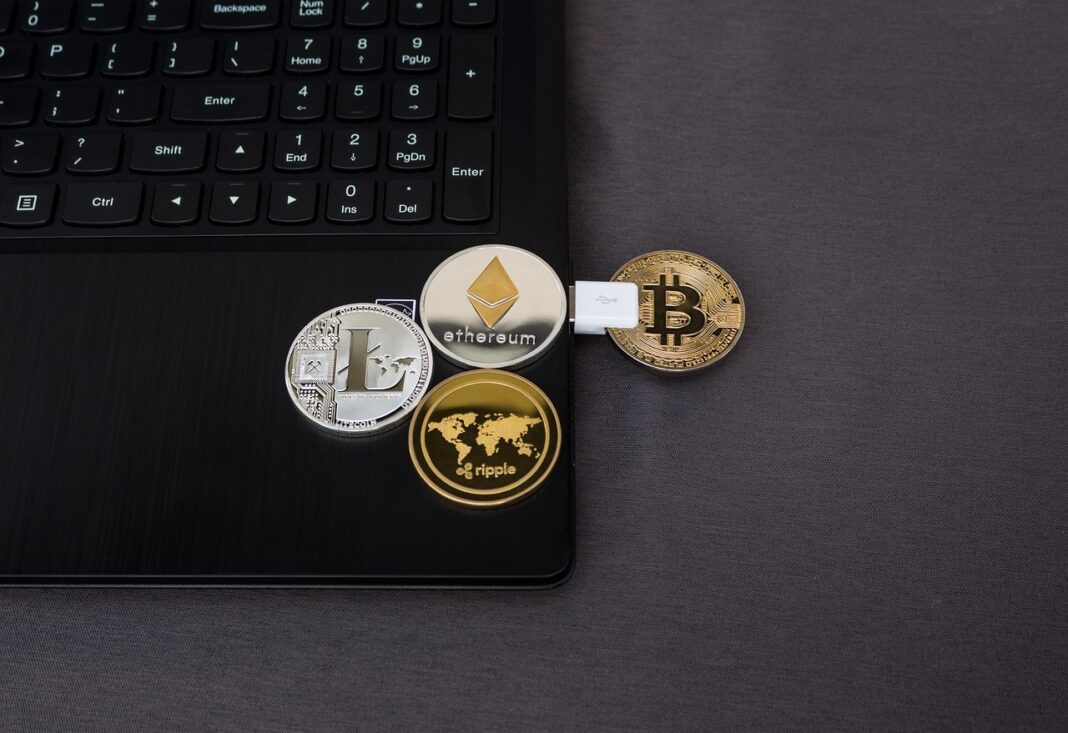
- Bitcoin (BTC): The first and largest cryptocurrency, primarily seen as a store of value and a peer-to-peer electronic cash system.
- Altcoins: Any cryptocurrency other than Bitcoin.
- Ethereum (ETH): The second-largest, known for its smart contract platform that enables decentralized applications (dApps), DeFi, and NFTs.
- Ripple (XRP): Focused on facilitating fast, low-cost international payments for financial institutions.
- Cardano (ADA): A proof-of-stake blockchain platform aiming to be a more scalable and sustainable alternative to Ethereum.
- Stablecoins: Cryptocurrencies designed to maintain a stable value relative to a fiat currency (e.g., USD Coin – USDC, Tether – USDT) or other assets, offering price stability in the volatile crypto market.
- Utility Tokens: Provide access to specific products or services within a blockchain ecosystem (e.g., Filecoin for decentralized storage).
Practical Example: You might use USDC to protect your crypto gains during market volatility, then swap it for ETH to participate in a DeFi lending protocol, or use a utility token to access a specific dApp.
Actionable Takeaway: Diversify your understanding beyond Bitcoin; research different types of cryptocurrencies to understand their specific use cases and investment potential.
Mining, Staking, and Consensus Mechanisms
How are new cryptocurrencies created, and how are transactions validated and added to the blockchain securely? This process relies on “consensus mechanisms,” which are rules that ensure all participants agree on the state of the ledger.
Proof-of-Work (PoW): The Concept of Mining
Proof-of-Work (PoW) is the original consensus mechanism, famously used by Bitcoin and older versions of Ethereum. It involves “mining” new blocks.
- Computational Puzzle: Miners use powerful computers to solve complex mathematical puzzles (hash functions). This process requires significant computational power and energy.
- Block Validation: The first miner to solve the puzzle gets to add the next block of verified transactions to the blockchain.
- Reward: For their effort, miners are rewarded with newly minted cryptocurrency (e.g., Bitcoin) and transaction fees.
Practical Example: Imagine millions of miners around the world competing to find a specific number. The one who finds it first wins the right to add the next block of Bitcoin transactions and gets new Bitcoins as a prize.
Actionable Takeaway: PoW provides robust security but comes at a high energy cost. Understand this trade-off when evaluating PoW cryptocurrencies.
Proof-of-Stake (PoS): The Concept of Staking
Proof-of-Stake (PoS) is an increasingly popular alternative to PoW, adopted by Ethereum 2.0 and many newer blockchains. It’s designed to be more energy-efficient.
- Staking Coins: Instead of mining, participants (validators) “stake” or lock up a certain amount of their cryptocurrency as collateral.
- Random Selection: Validators are then randomly selected to create and validate new blocks based on the amount of coin they have staked and how long they’ve staked it.
- Reward: If they correctly validate transactions and add a new block, they receive staking rewards (new coins and transaction fees). If they act maliciously, they risk losing their staked crypto (“slashing”).
Practical Example: Instead of solving puzzles, validators put their ETH on the line. If you stake 32 ETH, you might be chosen to validate a block. If you do it correctly, you earn more ETH. If you try to cheat, you could lose some of your staked ETH.
Actionable Takeaway: Staking allows you to earn passive income on your crypto holdings while contributing to network security, but be aware of locking periods and potential risks.
Wallets, Exchanges, and Transactions
To interact with cryptocurrencies, you need tools to store, buy, sell, and send them. This involves understanding crypto wallets and exchanges.
Cryptocurrency Wallets: Securing Your Digital Assets
A cryptocurrency wallet doesn’t actually “store” your crypto in the way a physical wallet holds cash. Instead, it stores your private keys, which are essential to access and manage your cryptocurrency on the blockchain.
- Hot Wallets: Connected to the internet.
- Software Wallets: Apps on your phone or desktop (e.g., MetaMask, Exodus). Convenient but more susceptible to online threats.
- Exchange Wallets: Wallets provided by centralized exchanges (e.g., Coinbase, Binance). Easy to use but you don’t control the private keys.
- Cold Wallets: Not connected to the internet.
- Hardware Wallets: Physical devices resembling USB drives (e.g., Ledger, Trezor). Considered the most secure for long-term storage as private keys are kept offline.
- Paper Wallets: Private and public keys printed on paper. Less common now due to potential for physical damage or loss.
Practical Example: If you buy Bitcoin on Coinbase, it’s held in a hot wallet managed by Coinbase. For long-term security, you might transfer it to a Ledger hardware wallet, moving your private keys offline.
Actionable Takeaway: For significant amounts of crypto, prioritize security by using a cold wallet where you have full control over your private keys. Remember: “Not your keys, not your crypto.”
Cryptocurrency Exchanges: Buying, Selling, and Trading
Cryptocurrency exchanges are platforms where you can buy, sell, or trade cryptocurrencies. They act as a bridge between traditional fiat currency and the crypto world.
- Centralized Exchanges (CEX):
- Operated by a company (e.g., Binance, Coinbase, Kraken).
- Often require Know Your Customer (KYC) and Anti-Money Laundering (AML) checks.
- Offer user-friendly interfaces, customer support, and various trading pairs.
- Decentralized Exchanges (DEX):
- Operate on blockchain technology, allowing peer-to-peer trading without an intermediary (e.g., Uniswap, PancakeSwap).
- Users retain custody of their funds; no KYC usually required.
- Can be more complex for beginners.
Practical Example: You can link your bank account to Coinbase (a CEX) to buy Bitcoin with USD. To trade less common altcoins directly from your wallet without an intermediary, you might use Uniswap (a DEX).
Actionable Takeaway: Start with reputable CEXs for your first purchases, but explore DEXs as you gain experience for greater financial sovereignty and access to a wider range of tokens.
Making a Transaction: Sending and Receiving Crypto
Sending and receiving cryptocurrency is a core function, resembling sending an email but with critical differences in security and finality.
- Get the Recipient’s Public Address: This is a unique string of characters (like an email address or bank account number) that identifies where the crypto should be sent.
- Initiate Transaction in Your Wallet: Specify the amount and the recipient’s public address.
- Sign with Private Key: Your wallet uses your private key to digitally sign the transaction, proving you authorize the transfer.
- Broadcast to Network: The signed transaction is sent to the blockchain network.
- Validation and Confirmation: Miners or validators confirm the transaction’s legitimacy and include it in a new block.
- Confirmation Time: After several blocks confirm the transaction, it’s considered irreversible and fully settled.
Practical Example: If your friend wants 0.01 Bitcoin, they’d send you their Bitcoin public address. You’d open your wallet, input that address and the amount, confirm, and sign the transaction. After a few minutes, the transaction would be confirmed on the Bitcoin blockchain, and your friend would see the funds in their wallet.
Actionable Takeaway: Always double-check the recipient’s public address before sending crypto, as transactions are irreversible once confirmed on the blockchain.
Benefits, Risks, and the Future of Crypto
Cryptocurrency introduces a paradigm shift with significant advantages, but it also comes with inherent risks and uncertainties.
Key Benefits of Cryptocurrency
The innovation that blockchain and crypto bring offers several compelling advantages over traditional financial systems.
- Decentralization & Empowerment: Users have greater control over their assets, free from central authority.
- Global & Faster Transactions: International transfers can be processed much quicker and often with lower fees than traditional banking.
- Financial Inclusion: Provides access to financial services for the unbanked or underbanked populations worldwide.
- Transparency & Security: Blockchain’s immutable public ledger enhances trust and reduces fraud.
- Innovation: Fuels new technologies like DeFi (Decentralized Finance), NFTs (Non-Fungible Tokens), and Web3 applications.
Practical Example: A migrant worker sending money home might pay 5-10% in fees and wait days for a bank transfer. A crypto transfer could cost less than 1% and arrive in minutes, directly to their family’s digital wallet.
Actionable Takeaway: Explore how crypto’s unique benefits could solve real-world problems or improve your personal financial situation, such as cheaper remittances or earning yield through DeFi.
Associated Risks
Despite its promise, the cryptocurrency market is not without its challenges and dangers.
- Volatility: Crypto prices can fluctuate wildly, leading to significant gains or losses in short periods.
- Regulatory Uncertainty: Governments worldwide are still developing regulations, leading to potential shifts in legality or tax implications.
- Security Risks: While blockchain is secure, user errors (lost private keys), exchange hacks, and sophisticated scams remain significant threats.
- Technical Complexity: The learning curve can be steep for newcomers, increasing the risk of mistakes.
- Environmental Concerns: PoW mining consumes substantial energy, raising environmental questions (though PoS aims to mitigate this).
Practical Example: A new investor puts their life savings into a meme coin based on hype, only to see its value plummet by 80% overnight due to market sentiment and lack of inherent utility.
Actionable Takeaway: Never invest more than you can afford to lose. Conduct thorough research (DYOR – Do Your Own Research) on any project, understand the risks, and prioritize security best practices for your assets.
The Future of Crypto
The cryptocurrency space is still in its early stages, constantly evolving and expanding its influence beyond mere digital money.
- Web3: Building a decentralized internet where users control their data and digital identities.
- DeFi (Decentralized Finance): Recreating traditional financial services (lending, borrowing, insurance) on the blockchain without intermediaries.
- NFTs (Non-Fungible Tokens): Revolutionizing digital ownership of art, collectibles, gaming assets, and more.
- CBDCs (Central Bank Digital Currencies): Central banks exploring issuing their own digital currencies, combining blockchain tech with centralized control.
- Mainstream Adoption: Increasing integration into everyday life, from payment options to institutional investment.
Practical Example: You might one day use a self-sovereign digital identity (Web3) to apply for a decentralized loan (DeFi) using your NFT as collateral, all without ever needing a bank.
Actionable Takeaway: Stay informed about emerging trends like DeFi and Web3, as these represent the cutting edge of crypto innovation and future applications.
Conclusion
Understanding how crypto works reveals a sophisticated ecosystem built upon revolutionary technology. From the immutable ledger of blockchain to the diverse world of digital assets, and the complex mechanics of mining and staking, cryptocurrencies represent a powerful shift in how we perceive and interact with value. While the journey into crypto demands diligence in understanding wallets, exchanges, and transaction processes, the potential for financial innovation, empowerment, and global connectivity is undeniable. Like any nascent technology, crypto comes with its share of risks, particularly around volatility and security. However, by embracing knowledge, practicing sound security habits, and approaching the space with a balanced perspective, you can confidently navigate this exciting and transformative digital frontier. The future of finance is unfolding before our eyes, and cryptocurrency is at its heart.