

In the rapidly evolving world of cryptocurrencies and blockchain technology, terms like “decentralization” and “immutable ledgers” often dominate the conversation. However, a less discussed but equally critical concept silently shapes the value of your digital assets: token inflation. Much like its traditional fiat counterpart, token inflation refers to the increase in the circulating supply of a particular cryptocurrency or digital token, leading to a potential decrease in the purchasing power of each individual unit. Ignoring this fundamental economic force can have significant implications for investors, developers, and the overall health of a blockchain ecosystem. Understanding token inflation isn’t just about technical jargon; it’s about safeguarding your investments and making informed decisions in the volatile crypto landscape.
What is Token Inflation? Understanding the Core Concept
Token inflation is the process by which the total supply of a cryptocurrency or digital token increases over time. This increase in supply can be a deliberate design choice within a project’s tokenomics or an unintended consequence of certain network mechanisms. Unlike traditional currencies where central banks manage supply, token inflation is typically governed by predefined rules embedded in the blockchain protocol or smart contracts.
Defining Token Inflation in the Digital Realm
- Supply Expansion: At its core, token inflation means more tokens are entering the market, increasing the total number of units available.
- Value Dilution: If demand remains constant or doesn’t grow proportionally, an increased supply often leads to a decrease in the value of each existing token.
- Protocol-Driven: The rate and method of token inflation are usually hardcoded into a project’s whitepaper and smart contracts, making it a transparent, albeit sometimes complex, factor.
Practical Example: Imagine a project launches with 100 million tokens. If its tokenomics dictates that 10 million new tokens are minted and distributed annually, it experiences a 10% inflation rate for that year, diluting the value of the original 100 million tokens.
Mechanisms of Token Creation and Distribution
New tokens don’t just appear; they are typically introduced into circulation through various well-defined mechanisms:
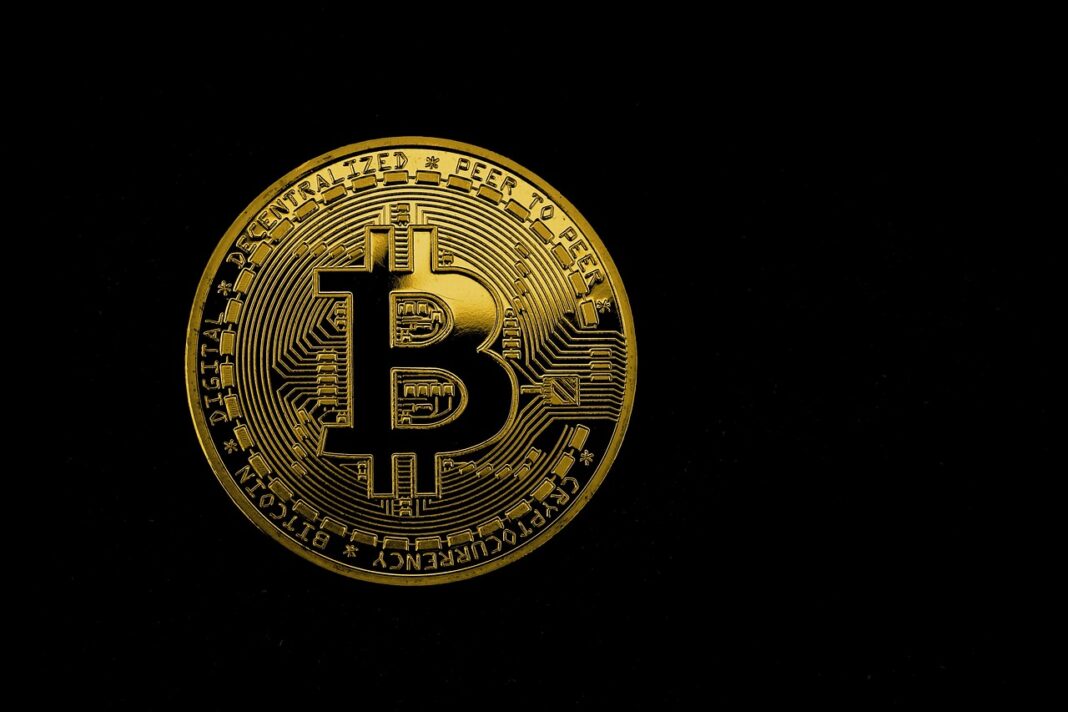
- Mining Rewards (Proof-of-Work): Block rewards given to miners for validating transactions and securing the network. Bitcoin is the prime example, where miners receive new BTC for successfully mining a block. These rewards halve approximately every four years, creating a decreasing inflation schedule.
- Staking Rewards (Proof-of-Stake): Tokens issued to validators who lock up their existing tokens to secure the network and validate transactions. Ethereum (after The Merge) now uses this model, rewarding ETH stakers with newly minted ETH.
- Liquidity Mining / Yield Farming: Protocols often issue new tokens as incentives to users who provide liquidity to decentralized exchanges (DEXs) or lend assets within DeFi protocols. These can lead to very high initial inflation rates.
- Treasury Issuance & Grant Programs: Many decentralized autonomous organizations (DAOs) or project foundations mint new tokens from a treasury to fund development, marketing, or community initiatives.
- Airdrops & Initial Token Distributions (ICO/IDO/IEO): While often one-time events, the initial release of a significant portion of a token’s supply can be seen as an inflationary shock, especially if those tokens become liquid immediately.
Actionable Takeaway: Always investigate a project’s tokenomics section in its whitepaper to understand how new tokens are introduced. This provides critical insight into the potential inflationary pressures.
The Good, The Bad, and The Volatile: Impacts of Token Inflation
Token inflation isn’t inherently evil; its impact is highly dependent on the project’s design, utility, and market demand. It can serve beneficial purposes, but unchecked or poorly managed inflation can be detrimental.
Potential Benefits: The “Good” Side of Inflation
When properly managed, token inflation can be a powerful tool for ecosystem growth:
- Network Security & Participation Incentives: Inflationary rewards (e.g., mining or staking rewards) incentivize individuals to contribute computational power or lock up assets, thereby securing the network and ensuring its operation. Without these incentives, many decentralized networks would struggle to maintain security.
- Funding Development & Growth: Newly minted tokens can be allocated to a project’s treasury, providing non-dilutive capital (from the project’s perspective) to fund ongoing development, marketing, and expansion, fostering innovation and user acquisition.
- Early Adoption & Distribution: High initial inflation, especially through liquidity mining or airdrops, can quickly distribute tokens to a broad user base, fostering decentralization and creating a vibrant community around the project.
- Facilitating Liquidity: Incentivizing liquidity providers with newly minted tokens can help bootstrap liquidity for new trading pairs on decentralized exchanges, making it easier for users to trade the token.
Practical Example: Early DeFi protocols offered incredibly high APY (Annual Percentage Yield) in their native tokens for users providing liquidity. While this led to rapid token price appreciation initially, it also created significant sell pressure as early farmers cashed out, demonstrating both the “good” (fast liquidity) and potential “bad” (price volatility) sides.
Potential Drawbacks: The “Bad” Side of Inflation
Uncontrolled or excessive token inflation can lead to significant negative consequences:
- Value Dilution for Holders: The most direct impact is the erosion of value for existing token holders. As new tokens enter circulation, the supply increases, and if demand doesn’t keep pace, the price per token tends to fall. This means your existing tokens are worth less in real terms.
- Downward Price Pressure: Newly minted tokens, especially those received as rewards, are often sold by recipients to cover operational costs (miners) or realize profits (stakers, yield farmers). This constant sell pressure can suppress the token’s price, making it harder for long-term growth.
- Reduced Investor Confidence: Projects with opaque or excessively high inflation rates can deter long-term investors who fear their holdings will be continuously diluted, leading to a focus on short-term speculation rather than fundamental value.
- “Death Spiral” Risk: In extreme cases, if a token’s price drops significantly due to high inflation, the value of rewards also drops. This can lead to participants abandoning the network (e.g., miners switching off), further jeopardizing security and utility.
Actionable Takeaway: Always assess if a project’s utility and demand drivers are strong enough to absorb its token inflation. A high inflation rate in a project with limited use cases is a significant red flag.
Market Volatility: The “Volatile” Aspect
Token inflation significantly contributes to market volatility:
- Predictable vs. Unpredictable Inflation: Projects with clear, predictable emission schedules (like Bitcoin’s halving) tend to have more stable, long-term price narratives. Projects with variable or governance-controlled inflation can introduce uncertainty.
- Unlock Schedules: Many projects have vesting schedules for team, advisors, and early investors. When large tranches of tokens unlock, it can create sudden sell pressure and market volatility, as these tokens enter the liquid supply.
Actionable Takeaway: Pay close attention to token unlock schedules, often found on crypto data sites. These can provide clues about impending supply shocks.
Key Factors Influencing Token Inflation Rates
Understanding what drives token inflation is crucial for investors. These factors are typically embedded in a project’s core design and evolve with its maturity.
Tokenomics Design and Emission Schedules
The most significant determinant of inflation is the project’s tokenomics:
- Fixed vs. Unlimited Supply: Some tokens have a hard cap on their total supply (e.g., Bitcoin’s 21 million). Others have an unlimited supply, where inflation is an ongoing feature (e.g., Ethereum’s supply is technically uncapped, though EIP-1559 and staking mechanisms aim for net deflation).
- Emission Rate & Schedule: How quickly new tokens are released into circulation. This can be linear, decreasing (like Bitcoin’s halving), or have specific unlock events at milestones.
- Vesting Schedules: The timeline over which team, advisors, and early investors receive their tokens. Longer vesting periods help mitigate early sell-offs and immediate inflationary pressure.
Practical Example: A token might have an initial circulating supply of 50 million, but a total supply of 1 billion, with the remaining 950 million scheduled to unlock over 10 years. This gradual release creates a predictable, albeit high, inflation rate.
Deflationary Mechanisms (Offsetting Inflation)
Many projects implement mechanisms to counteract inflation, some even aiming for a net deflationary supply over time:
- Token Burning: Permanently removing tokens from circulation. This can be done through transaction fees (e.g., Ethereum’s EIP-1559 burns a portion of base fees), protocol revenue (e.g., Binance Coin burns a portion of its profits), or even community proposals.
- Buybacks: A project treasury might use protocol revenue to buy back its native token from the open market and then burn it or distribute it, effectively reducing circulating supply.
- Fee Generation: If a protocol generates significant fees that are not distributed as new tokens but rather burned or used to provide value in other ways, it can indirectly offset inflation.
Actionable Takeaway: Always look for deflationary mechanisms. A project with a well-designed burning mechanism can offset high emission rates, making it more sustainable in the long run.
Network Activity and Demand
Even with high inflation, strong demand can absorb new supply:
- Utility & Adoption: Tokens with genuine utility, growing user bases, and increasing demand for their services are better positioned to handle inflation. If more people want to use or hold the token, the price pressure from new supply is less impactful.
- Staking Ratios: A high percentage of tokens staked (locked up for network security) effectively reduces the liquid circulating supply, making the actual tradable supply less susceptible to inflation’s effects.
Practical Example: A gaming token might have high emissions to reward players, but if the game becomes extremely popular, the demand for its token (for in-game purchases, governance, etc.) could outpace the new supply, leading to price appreciation despite inflation.
Governance Decisions and Project Stage
These dynamic factors can also shift inflation rates:
- DAO Governance: For decentralized projects, token holders often have the power to vote on proposals that can alter inflation rates, emission schedules, or introduce new burning mechanisms.
- Project Maturity: Early-stage projects often have higher inflation to incentivize bootstrapping. As a project matures, the goal often shifts towards stability, and inflation rates may decrease or deflationary mechanisms become more prominent.
Actionable Takeaway: Understand the governance model and project roadmap. A project’s commitment to long-term sustainability often involves eventual reduction of inflationary pressures.
Strategies to Mitigate the Effects of Token Inflation for Investors
As an investor, you’re not powerless against token inflation. Proactive research and strategic thinking can help you navigate its impact.
1. Conduct Thorough Due Diligence (DYOR)
This is the cornerstone of managing inflation risk:
- Analyze Tokenomics: Deep dive into the project’s whitepaper, official documentation, and tokenomics papers. Understand the total supply, circulating supply, emission schedule, and vesting periods.
- Identify Deflationary Measures: Look for token burning mechanisms, buyback programs, or any other features designed to reduce the circulating supply over time.
- Assess Utility and Demand: Evaluate the project’s real-world utility, user adoption, and future growth potential. Strong demand can counteract inflationary pressure.
Actionable Tip: Use tools like CoinGecko or CoinMarketCap to quickly check circulating supply, total supply, and max supply. Then, go to the project’s official website for detailed tokenomics documents.
2. Evaluate Staking and Yield Opportunities
Earning rewards can help offset dilution:
- Calculate Real Yield: If you stake a token with a 10% APY and the token experiences 5% inflation, your net gain in purchasing power (assuming no price change) is effectively 5%. Always compare the staking APY to the token’s annual inflation rate.
- Understand Risks: Be aware of risks associated with staking (e.g., slashing penalties) and yield farming (e.g., impermanent loss, smart contract exploits).
Practical Example: If a token has a 12% inflation rate, but you can stake it for 15% APY, you are still gaining 3% in real terms (before taxes and price fluctuations). However, if the APY is only 8%, you are losing 4% of your purchasing power annually, even while “earning” rewards.
3. Diversify Your Portfolio
Don’t put all your eggs in one basket, especially with high-inflation tokens:
- Spread Risk: Invest across a range of projects with different tokenomic models – some with fixed supply, some with moderate inflation, and some with strong deflationary mechanisms.
- Balance Strategies: Combine investments in projects with predictable, low inflation (e.g., Bitcoin) with those offering higher but potentially more volatile returns (e.g., certain DeFi tokens with high staking rewards).
Actionable Tip: Allocate a smaller percentage of your portfolio to highly inflationary assets and ensure that exposure aligns with your risk tolerance.
4. Focus on Long-Term Value and Adoption
Beyond the inflation rate, consider the project’s fundamental strength:
- Sustainable Ecosystems: Prioritize projects building sustainable ecosystems with robust technology, active development, strong community, and a clear path to widespread adoption. These factors are ultimately more powerful than inflation in driving long-term value.
- Real-World Use Cases: Tokens that solve real problems or offer unique services tend to attract sustained demand, which can absorb inflationary supply increases.
Actionable Tip: Look for metrics like daily active users, transaction volume, developer activity, and partnerships as indicators of adoption and utility.
Case Studies: Inflation in Action
Examining real-world examples helps illustrate how different inflation models play out in the market.
Bitcoin: Predictable, Decreasing Inflation
- Model: Proof-of-Work (PoW) with a fixed supply cap of 21 million BTC.
- Inflation Mechanism: Block rewards to miners, which halve approximately every four years (the “halving” event).
- Impact: This predictable, decreasing inflation rate, coupled with the hard cap, creates a strong scarcity narrative. While new BTC is still minted, the rate of new supply constantly diminishes, making it increasingly scarce over time. This model has historically contributed to Bitcoin’s store-of-value proposition and long-term price appreciation.
- Actionable Insight: Projects with clear, decreasing emission schedules often command greater investor confidence for long-term holding.
Ethereum: Evolving Inflation to “Ultrasound Money”
- Model: Transitioned from PoW to Proof-of-Stake (PoS) in The Merge.
- Inflation Mechanism: Staking rewards to validators. Crucially, with EIP-1559, a portion of transaction fees (the “base fee”) is burned, permanently removing ETH from circulation.
- Impact: Ethereum’s tokenomics now features both new issuance (staking rewards) and deflationary burns. The net effect can vary. During periods of high network activity, the burn rate can exceed the issuance rate, making ETH potentially deflationary (“ultrasound money”). This innovative approach aims to balance network security incentives with value preservation.
- Actionable Insight: Look for dynamic tokenomic models that adapt to network usage, often incorporating burning mechanisms to offset inflation.
DeFi Yield Farming Tokens: High Initial Inflation
- Model: Many early Decentralized Finance (DeFi) protocols used high token emissions to incentivize liquidity providers.
- Inflation Mechanism: Significant amounts of new tokens minted and distributed daily/weekly as rewards for staking or providing liquidity.
- Impact: Initially, these tokens can experience parabolic price growth due to the excitement around high APYs and new decentralized applications. However, the continuous influx of new tokens, coupled with users selling rewards, often leads to intense sell pressure once the initial hype fades. This frequently results in significant price corrections and long-term dilution for those who bought at the peak.
- Actionable Insight: Be extremely cautious with projects offering unsustainably high APYs through token emissions. These are often signs of high inflation and can lead to rapid value erosion if not managed effectively.
Conclusion
Token inflation is a multifaceted economic force in the world of digital assets, presenting both opportunities and risks. It is not merely a technical detail but a fundamental aspect of a project’s long-term viability and your investment’s potential returns. While inflation can be a powerful tool for incentivizing network participants, funding development, and bootstrapping liquidity, unchecked or poorly managed issuance can lead to significant value dilution and erode investor confidence.
As a savvy investor, your primary defense against the silent erosion of token inflation lies in proactive due diligence. Thoroughly understand a project’s tokenomics, emission schedule, and any implemented deflationary mechanisms. Evaluate the project’s utility and demand drivers, as strong adoption can mitigate inflationary pressures. By diversifying your portfolio, strategically participating in staking, and always focusing on projects with sustainable long-term value propositions, you can navigate the complex dynamics of token inflation and make more informed decisions in your cryptocurrency journey.
Stay informed, stay analytical, and remember that knowledge of tokenomics is your strongest asset in the ever-evolving digital economy.