

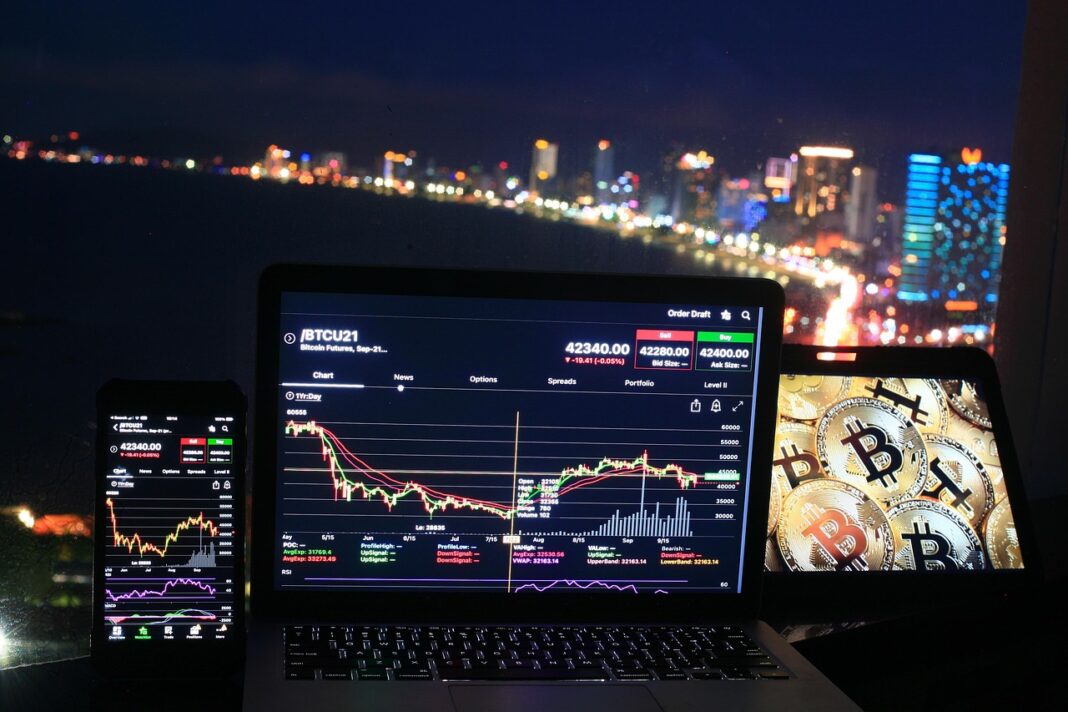

The allure of Bitcoin is undeniable, and for many, the idea of “mining” it from thin air holds a unique fascination. Bitcoin mining is not about excavating physical resources; rather, it’s the high-tech process that validates and adds new transactions to the blockchain, thereby creating new Bitcoins. While it might sound like a highly technical endeavor reserved for experts, understanding the fundamentals of how to mine Bitcoin can demystify the process and reveal the intricate system that underpins the world’s leading cryptocurrency. This comprehensive guide will walk you through the journey from concept to practical setup, helping you grasp whether joining the ranks of Bitcoin miners is a venture worth pursuing in today’s dynamic crypto landscape.
## What is Bitcoin Mining and How Does It Work?
Bitcoin mining is the backbone of the Bitcoin network, ensuring its security, verifying transactions, and introducing new coins into circulation. It’s a competitive process where participants use powerful computers to solve complex cryptographic puzzles. The first miner to solve the puzzle gets to add the next block of verified transactions to the blockchain and is rewarded with newly minted Bitcoin and transaction fees.
### The Role of Miners
Miners perform several critical functions for the Bitcoin network:
- Transaction Verification: They gather unconfirmed transactions, verify their legitimacy (e.g., ensuring no double-spending), and group them into a block.
- Network Security: By expending significant computational power, miners secure the network against fraudulent activities and ensure the integrity of the blockchain. This “work” makes it prohibitively expensive for a malicious actor to alter past transactions.
- New Bitcoin Creation: Miners are rewarded with newly generated Bitcoins (the “block reward”) for successfully adding a block. This is the only way new Bitcoins are introduced into the supply.
Actionable Takeaway: Understand that miners are not just creating coins; they are the decentralized guardians and record-keepers of the entire Bitcoin ecosystem, performing an essential service that makes the network trustless and secure.
### Understanding Proof-of-Work (PoW)
Bitcoin uses a consensus mechanism called Proof-of-Work (PoW). Here’s a simplified breakdown:
- Miners compete to find a number (a “nonce”) that, when combined with the data in the block and hashed, produces a result (a “hash”) that is less than or equal to a target set by the network.
- This target is known as the “difficulty” and adjusts roughly every two weeks to keep the average block creation time around 10 minutes.
- Finding this nonce is essentially a guessing game that requires immense computational power. It’s like finding a needle in a haystack, but proving you found it is easy.
- Once a miner finds the correct nonce, they broadcast the new block to the network for verification by other nodes.
Example: Imagine millions of miners simultaneously trying different combinations of numbers until one of them stumbles upon the correct sequence that satisfies the network’s cryptographic puzzle. This discovery validates the block.
### Block Reward and Transaction Fees
Miners are incentivized through two main revenue streams:
- Block Reward: Currently, the block reward is 3.125 BTC per block, having halved from 6.25 BTC in April 2024. This reward halves approximately every four years (every 210,000 blocks) until all 21 million Bitcoins are mined, estimated around 2140.
- Transaction Fees: Miners also collect the transaction fees attached to all transactions included in their successfully mined block. In times of high network congestion, these fees can sometimes exceed the block reward.
Actionable Takeaway: The block reward is a significant but diminishing source of income. Transaction fees will become increasingly important for miner profitability as block rewards continue to halve.
## Essential Hardware for Bitcoin Mining
Gone are the days when you could mine Bitcoin with a regular desktop CPU or GPU. Today, Bitcoin mining requires specialized, powerful hardware designed for one purpose: solving the PoW algorithm as efficiently as possible.
### ASIC Miners (Application-Specific Integrated Circuits)
ASIC miners are the undisputed champions of Bitcoin mining. They are custom-built devices engineered solely to perform the SHA-256 hashing algorithm used by Bitcoin. This specialization makes them thousands of times more efficient than general-purpose CPUs or GPUs for mining Bitcoin.
- Key Characteristics: High hash rate (the speed at which they can perform calculations), high power consumption, specialized design.
- Leading Manufacturers: Bitmain (Antminer series), MicroBT (WhatsMiner series), Canaan (AvalonMiner series).
- Choosing an ASIC: Consider its hash rate, power efficiency (Joules per Terahash), purchase price, and reliability. Newer models typically offer better efficiency but come at a higher cost.
Practical Example: A popular ASIC miner like the Antminer S19 XP Hydro offers a hash rate of around 257 TH/s (Terahashes per second) but can consume over 5,000 watts of power, highlighting the need for robust electrical infrastructure and cooling.
### Power Supply Unit (PSU)
Given the immense power demands of ASICs, a high-quality, reliable PSU is absolutely critical. Most ASICs come with an integrated PSU, but if you’re building a custom rig or replacing a faulty component, ensure the PSU meets or exceeds the miner’s power requirements and offers stable power delivery. Opt for PSUs with an 80 PLUS certification for better energy efficiency.
### Cooling and Ventilation
ASIC miners generate a significant amount of heat. Adequate cooling and ventilation are paramount to prevent overheating, which can lead to reduced performance, hardware damage, and a shortened lifespan. Ignoring cooling can quickly turn your investment into scrap metal.
- Strategies:
- Open-Air Rigs: For smaller setups, ensuring good airflow in a well-ventilated room can suffice.
- Exhaust Fans: Industrial-grade exhaust fans can help remove hot air from mining rooms.
- HVAC Systems: Larger operations often require dedicated HVAC systems to maintain optimal temperatures.
- Immersion Cooling: Advanced solutions involve submerging ASICs in dielectric fluid for highly efficient heat dissipation, often used in large-scale data centers.
- Temperature Monitoring: Regularly monitor the operating temperatures of your ASICs using built-in software or external sensors.
Actionable Takeaway: Investing in robust cooling infrastructure is as important as investing in the miner itself. Overheating is a primary cause of hardware failure and efficiency loss.
## Software and Connectivity for Mining
Once your hardware is in place, you’ll need the right software and connectivity to get your mining operation running and ensure you receive your earned Bitcoins.
### Mining Software
Most modern ASICs come with pre-installed firmware that includes mining software. However, some users might opt for third-party mining software for additional features, better control, or compatibility with specific mining pools. Popular options include:
- BFGMiner: A modular ASIC/FPGA miner written in C, compatible with various devices.
- CGMiner: Another widely used command-line based Bitcoin miner that supports ASICs.
These software solutions allow you to configure your miner to connect to a specific mining pool, monitor its performance, and adjust settings.
### Joining a Mining Pool
With the immense difficulty of Bitcoin mining, individual miners have a vanishingly small chance of solving a block on their own. This is where mining pools come in. A mining pool is a group of miners who combine their computational power to increase their chances of solving a block. When the pool successfully mines a block, the reward is split among all participants based on the amount of work contributed.
- Benefits of Pools:
- More Consistent Payouts: Reduces variance and provides more regular, albeit smaller, Bitcoin payouts.
- Lower Barrier to Entry: Allows smaller miners to participate and earn.
- Shared Resources: Some pools offer additional services or support.
- Choosing a Pool: Consider its fee structure (e.g., Pay-Per-Share, Proportional), payout frequency, reliability, and reputation. Some popular pools include F2Pool, AntPool, ViaBTC, and Slush Pool.
Practical Example: If you’re a small miner with one ASIC, joining a pool will allow you to earn a small fraction of Bitcoin daily or weekly, rather than waiting months or years (and likely never) to solo mine a block.
### Bitcoin Wallet Setup
Before you start mining, you need a secure Bitcoin wallet to receive your payouts from the mining pool. There are several types of wallets:
- Hardware Wallets: (e.g., Ledger, Trezor) Offer the highest security, keeping your private keys offline. Recommended for larger sums.
- Software Wallets: (e.g., Electrum, Exodus) Desktop or mobile applications, generally easy to use.
- Web Wallets: (e.g., Coinbase, Binance) Online services that store your funds. Convenient but less secure as you don’t control your private keys.
Actionable Takeaway: Always use a wallet where you control your private keys, especially for funds accumulated from mining. A hardware wallet is the safest option for significant amounts of Bitcoin.
## The Economics of Bitcoin Mining: Is It Profitable?
The profitability of Bitcoin mining is a complex equation influenced by numerous fluctuating factors. It’s crucial to approach mining as a business venture, carefully analyzing costs and potential revenues.
### Calculating Profitability (Factors)
Several key variables determine whether Bitcoin mining will be profitable for you:
- Bitcoin Price: The market value of Bitcoin directly impacts the value of your mining rewards.
- Hash Rate of Your Miner: How much computational power your equipment contributes to the network.
- Network Difficulty: How hard it is to find a block. This adjusts dynamically based on the total hash rate of the network. As more miners join, difficulty increases.
- Block Reward: The amount of new Bitcoin received per block, which halves approximately every four years.
- Transaction Fees: The variable fees collected by miners for transactions.
- Electricity Cost: The most significant operational expense for most miners.
- Hardware Cost: The upfront investment in ASIC miners and related infrastructure.
- Pool Fees: The percentage a mining pool takes from your earnings.
Many online Bitcoin mining profitability calculators can help you estimate potential earnings by plugging in these variables. Remember these are estimates and future conditions can change dramatically.
### Electricity Costs
Electricity is the Achilles’ heel for many aspiring miners. Bitcoin mining is notoriously energy-intensive. Even the most efficient ASICs consume significant power around the clock. Your electricity rate (typically measured in USD per kilowatt-hour, kWh) will be the primary determinant of your operational expenses.
- Finding Low Rates: Miners actively seek regions with abundant, cheap electricity, often from renewable sources like hydroelectric or geothermal power.
- Impact: If your electricity cost is too high (e.g., above $0.08-$0.10/kWh), it may be challenging to turn a profit, especially for older, less efficient hardware.
Practical Example: An ASIC drawing 3,500 watts (3.5 kW) at an electricity rate of $0.05/kWh will cost $4.20 per day (3.5 kW 24 hours $0.05/kWh = $4.20). Over a month, this is $126, which must be offset by your Bitcoin earnings.
### Hardware Costs and Obsolescence
The initial investment in ASIC miners can be substantial, often thousands of dollars per unit. Furthermore, mining hardware has a relatively short lifespan in terms of competitive efficiency. Newer, more powerful, and more energy-efficient models are constantly being released, making older hardware obsolete relatively quickly.
- Depreciation: Account for the rapid depreciation of your mining hardware.
- Upgrade Cycles: To remain competitive, miners often need to upgrade their equipment every 1-3 years.
### Bitcoin Price Volatility
The price of Bitcoin is famously volatile. A sudden drop in Bitcoin’s value can quickly turn a profitable mining operation into a loss-making one, even if your operational costs remain constant. Conversely, a price surge can make older, less efficient hardware profitable again.
Actionable Takeaway: Conduct thorough due diligence using current data and consider various scenarios (e.g., Bitcoin price drops by 30%) when evaluating profitability. Don’t underestimate the impact of electricity costs and hardware depreciation.
## Step-by-Step Guide to Setting Up Your Mining Rig
Ready to get your hands dirty? Here’s a simplified guide to setting up your Bitcoin mining rig.
### Hardware Assembly and Connection
- Unpack and Inspect: Carefully unbox your ASIC miner and inspect for any shipping damage.
- Placement: Choose a location with good ventilation, away from dust and moisture, and where the noise won’t be an issue (ASICs are loud!). Ensure it’s close to a suitable power outlet.
- Power Connection: Connect the PSU to the ASIC miner using the provided cables. Then, plug the PSU into a dedicated, properly grounded electrical outlet. Avoid power strips with other high-power devices.
- Network Connection: Connect the miner to your internet router or switch using an Ethernet cable. A stable, wired connection is crucial for consistent performance. Wi-Fi is generally not recommended due to latency and reliability issues.
### Software Configuration
- Find Miner IP: Power on your ASIC. Use an IP scanner tool on your network (or check your router’s DHCP client list) to find your miner’s assigned IP address.
- Access Miner Interface: Open a web browser and enter the miner’s IP address. This will typically take you to the miner’s web-based management interface.
- Login: Enter the default username and password (often ‘root’ and ‘root’, or ‘admin’ and ‘admin’ – consult your miner’s manual). Change default credentials immediately for security.
- Configure Mining Pool: Navigate to the “Miner Configuration” or “Settings” section. Here, you’ll enter the details for your chosen mining pool:
- Pool URL/Host: The server address of your mining pool (e.g., stratum+tcp://us.ss.btc.com:1800).
- Worker Name: Your pool username followed by a period and a unique worker identifier (e.g., your_username.worker1).
- Password: Usually ‘x’ or a specific password if your pool requires one.
- Save and Restart: Save your settings and restart the miner if prompted.
### Monitoring and Maintenance
Once configured, your miner should start hashing. You can monitor its performance through the miner’s web interface and your mining pool dashboard.
- Regular Monitoring: Keep an eye on the hash rate, temperature, and fan speed of your miner. Look for consistent performance and ensure temperatures remain within safe operating limits.
- Cleaning: Periodically clean your miner to prevent dust buildup on fans and heat sinks, which can impede cooling. Use compressed air, but be gentle.
- Firmware Updates: Check for official firmware updates from your miner’s manufacturer. Updates can improve performance, stability, or introduce new features.
- Security: Regularly change your miner’s login credentials and keep your network secure.
Actionable Takeaway: Proper setup, vigilant monitoring, and routine maintenance are crucial for maximizing your miner’s lifespan and ensuring continuous, efficient operation.
## Conclusion
Bitcoin mining is a complex and capital-intensive endeavor that plays a vital role in the security and operation of the world’s most prominent cryptocurrency. While the dream of striking it rich by mining Bitcoin is captivating, the reality involves significant upfront costs, ongoing electricity expenses, fierce competition, and the constant need for hardware upgrades. For individual enthusiasts with access to very low-cost electricity, it can still be a fascinating pursuit. However, for most, joining a mining pool or exploring cloud mining options might be a more accessible entry point, or simply investing directly in Bitcoin. Understanding the mechanics, economics, and practicalities detailed in this guide is the first step toward making an informed decision about whether to embark on your own Bitcoin mining journey.